Lollipop Man 🎅
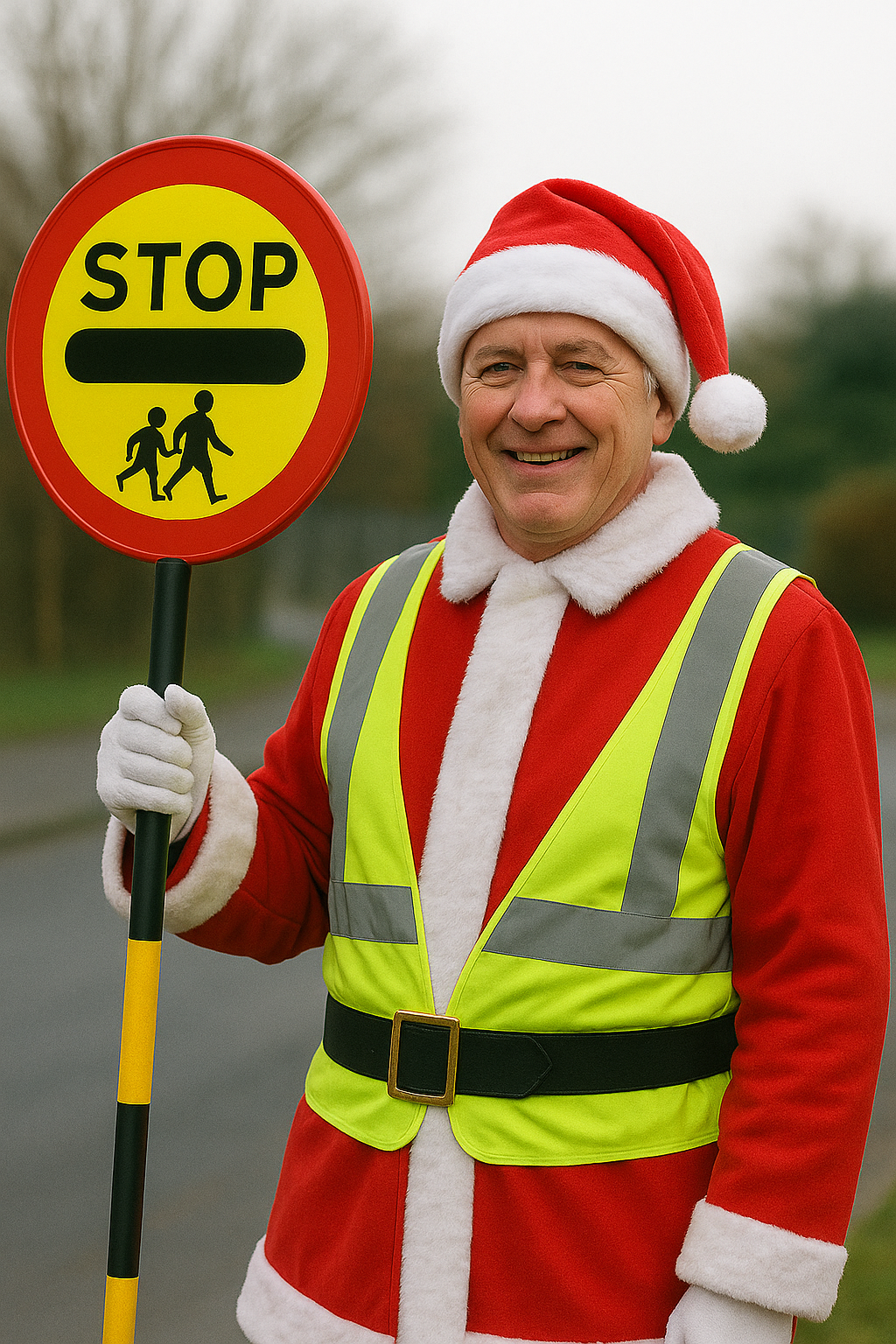
The history of “lollipop men” and “lollipop ladies” in the UK — officially known as school crossing patrols — is a fascinating story of postwar safety reform and community service. Here’s a clear timeline and overview:
🛑 Origins (1940s–1950s)
Post–World War II Britain saw a huge rise in car ownership, leading to more road accidents — particularly involving children walking to school.
In response, the School Crossing Patrol Service was officially introduced under the Road Traffic Regulation Act 1947.
The first patrols began work in 1953 — the same year as Queen Elizabeth II’s coronation.
They were employed by local councils and authorized to stop traffic to help children cross the road safely near schools.
🍭 The “Lollipop” Name and Sign (1950s–1960s)
The distinctive round sign — a red circle with “STOP Children” — resembled a giant lollipop, inspiring the nickname “lollipop man” or “lollipop lady”.
The design made patrols instantly recognizable and visible to drivers.
The role was usually part-time, often filled by local community members, retirees, or parents.
🚸 Legal Powers and Expansion (1960s–1980s)
The Road Traffic Regulation Act 1960 formally gave patrols the legal authority to stop traffic — not just assist children.
In 1973, their powers were extended so they could help any pedestrian, not only children, cross the road safely.
The service became a beloved and respected feature of daily life in British towns and villages.
👷 Changes and Challenges (1990s–Present)
During the 1990s and 2000s, budget cuts and shifting local priorities led many councils to reduce or withdraw patrols.
However, the public affection for lollipop men and women remained strong. Many communities campaigned successfully to keep or restore patrols.
Modern uniforms now include high-visibility jackets and reflective materials to improve safety.
❤️ Cultural Impact
The “lollipop person” has become an iconic British figure, symbolizing care, community, and road safety.
They’ve appeared in children’s books, TV shows, and public safety campaigns.
The role continues today, though numbers have declined — there were once over 12,000 patrols nationwide, compared to fewer than 7,000 in recent years.
🕰️ Summary
| Year | Event |
|---|---|
| 1947 | School Crossing Patrols authorized by law |
| 1953 | First patrols begin work in the UK |
| 1960 | Patrols gain legal power to stop traffic |
| 1973 | Powers extended to protect all pedestrians |
| 1990s–2000s | Decline in numbers due to budget cuts |
| Today | Still active in many areas, though fewer in number |